The #1 question I hear after knee replacement
“When can I get in the pool after knee replacement?”
It’s the question I hear more than any other from people with a new knee. And I understand why. You’ve heard the water is easier on your joints, maybe a friend swears by their aquafit class, and after weeks of exercises on the living-room floor, the idea of moving in warm water sounds wonderful.
So here’s my honest answer: it isn’t a number of days. You’ll hear “six weeks,” “eight weeks,” “three months,” and every one of those can be right for someone. But the timing that matters is yours, and it comes down to three green lights. When all three are on, the pool is one of the best places you can be!
Why the timing matters
Start too early, and you risk a setback that costs you weeks and shakes your confidence. Wait too long, and something else happens: you move less, the stairs get a little harder, and your world starts to shrink. Neither one is where we want you.
The good news is that the three green lights take the guesswork out of it.
Green light 1: You’ve been cleared for water-based exercise

Being cleared “for exercise” and being cleared “for the pool” aren’t always the same thing. Your surgeon or physical therapist knows your knee, your incision and your history, so they’re the right people to make this call. That’s their job, not mine and not yours.
At your next appointment, ask the question directly:
- “Am I cleared for water-based exercise?”
- “Is there anything I should avoid in the pool for now?”
- “Is there anything about my health, not just my knee, I should keep in mind?”
Write the answers down. If you’re still doing physical therapy, ask whether pool work can happen alongside it. For many people it can, and it complements the work you’re already doing. It doesn’t replace it.
Green light 2: Your incision is fully healed
This one isn’t negotiable. A pool is shared water, and an incision that isn’t fully closed and healed is a way in for bacteria. That’s why surgeons ask you to wait.
“Fully healed” means fully closed, with no open areas, scabbing or drainage. Don’t judge it yourself in the bathroom mirror. Let your surgeon or PT look at it and confirm it.
Green light 3: You can get in, get out, and stand steadily
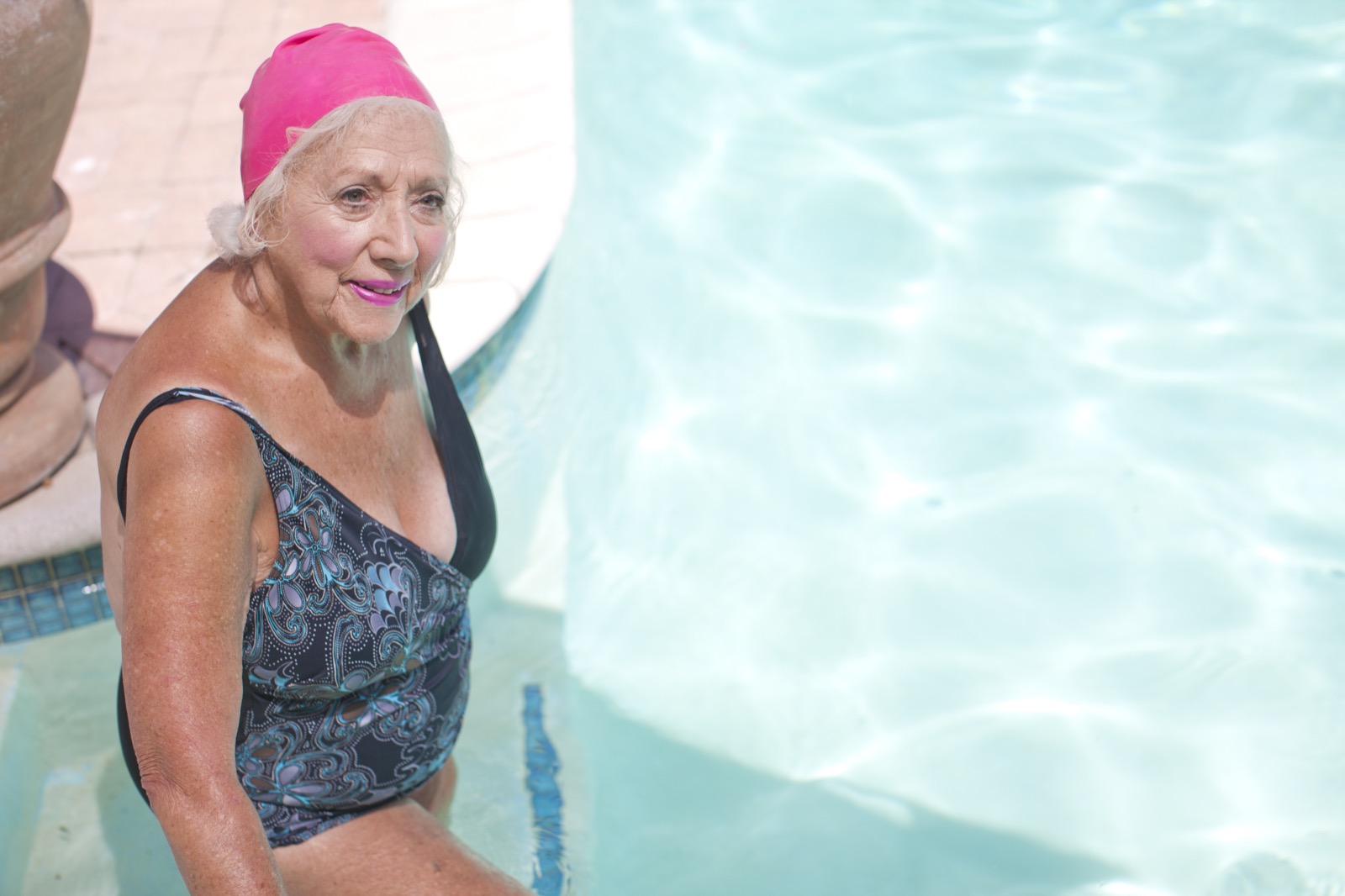
This is the one people forget. Before you exercise in the water, you need to be able to:
- Get in and out safely, ideally using pool stairs with a handrail
- Stand steadily in water somewhere between hip-deep and chest-deep
- Feel comfortable in the water, without fear
You don’t need to be a strong swimmer. Most pool exercise happens standing up with your feet on the bottom. Being able to float with a pool noodle is recommended, though, along with getting your feet back under you if you lose your footing.
If you’re not sure, make your first visit a “scouting trip.” Go at a quiet time, find the stairs and the railing, step in, walk a few lengths beside the wall, and step out again. That’s a win!
Why a warm pool helps after knee replacement
Once your three green lights are on, look for warm water: around 85°F (29°C) or warmer. Warm water helps your muscles relax, and it’s simply more comfortable when you’re moving gently rather than swimming laps. Many community pools run cooler for lap swimmers, so call the front desk and ask. Therapy pools and some seniors’ or community-centre pools are often warmer.
The water itself is doing a lot of work for you, too. Buoyancy, the water’s upward push, carries much of your body weight when you’re chest-deep, so every step puts less load on the new joint. Hydrostatic pressure, the gentle, even squeeze of the water around your legs, supports your circulation. And because the water slows everything down, a wobble has time to settle. In here, a stumble is just a stumble.
Your first pool sessions after knee replacement: what they should feel like
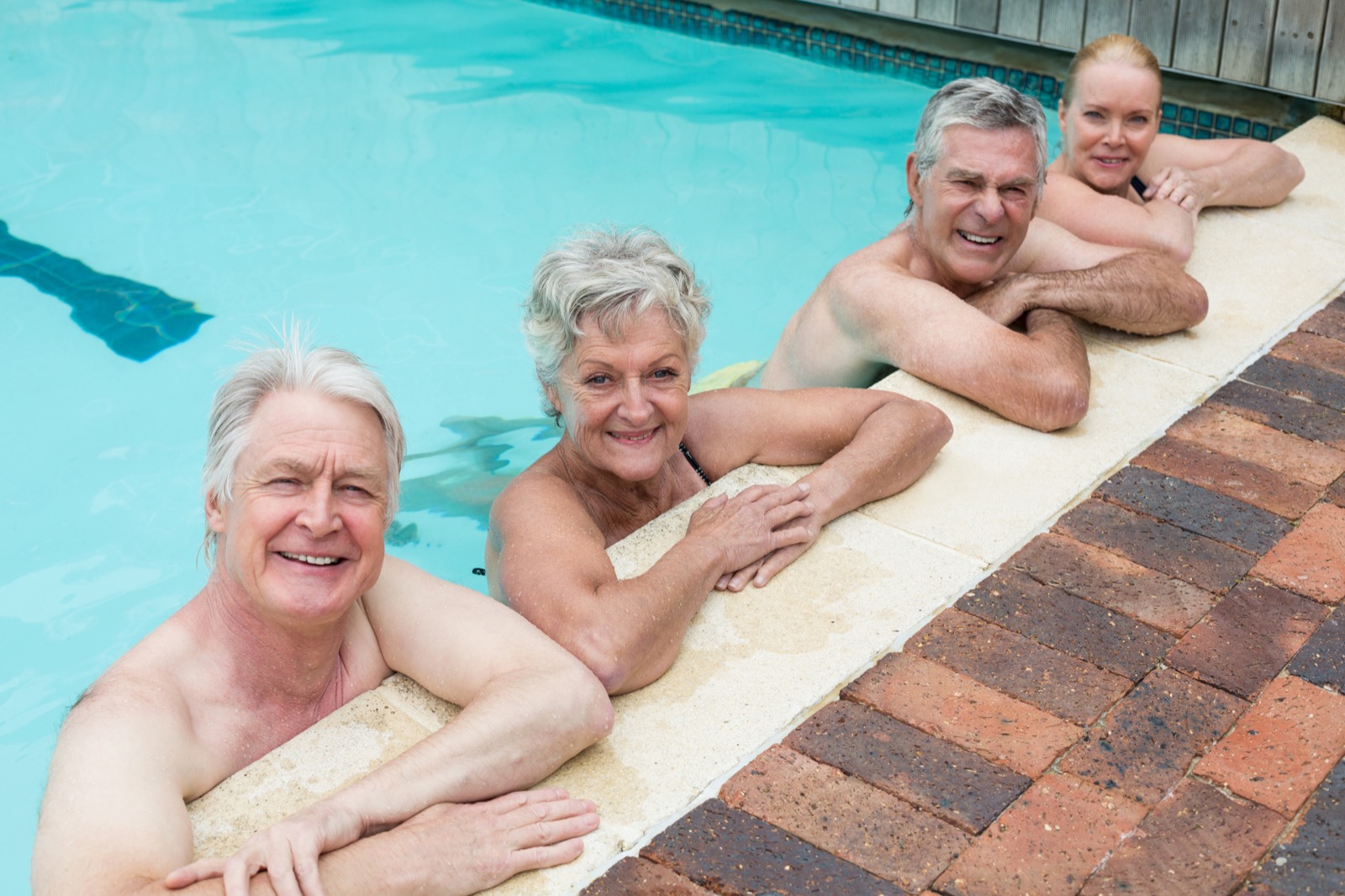
Your first few sessions should feel easy, almost too easy. That’s deliberate!
- Start shorter and gentler than you think. Walking forward, sideways and backward beside the wall is a perfect beginning.
- Use the talk test. You should always be able to speak in full sentences.
- Expect to feel worked, not hurt. Some muscle tiredness is normal. Sharp pain is not.
- Pause and reassess if pain sets in. Check your form, try a smaller, slower version, and if the pain doesn’t settle, stop for the day and check in with your medical team.
One thing to try this week
Check your three green lights:
- ☐ Cleared by my surgeon or PT for water-based exercise
- ☐ Incision fully healed, confirmed by my medical team
- ☐ I can get in, get out, and stand steadily in the pool
If you have all three, go find your pool and take that scouting trip. If you’re missing one, write down your question for your next appointment. Either way, you’ve taken a step forward.
Before you start, and every time you exercise
This article is general information, not medical advice. Always get clearance from your surgeon or physical therapist before starting any exercise program.
Stop and contact your medical team if you notice: increasing knee swelling, warmth or redness · a fever · calf pain or tenderness · chest pain or shortness of breath · dizziness or lightheadedness · new or worsening pain.
Want to see what a gentle first pool session looks like? I’ve put together a free 14-minute pool session for rebuilding after knee replacement, plus a printable Pool Starter Guide you can look over before your first visit.
Justin Gauthier, BSc (Hons) Human Kinetics, ACSM Certified Exercise Physiologist. I’m an exercise physiologist, not a physician or physical therapist, so I work alongside your medical team: they guide your recovery, and I help you keep moving in the water once they’ve cleared you. Please read my Disclaimers.